The AI-Native Organization
A Manifesto for Complex Intelligence
TL;DR
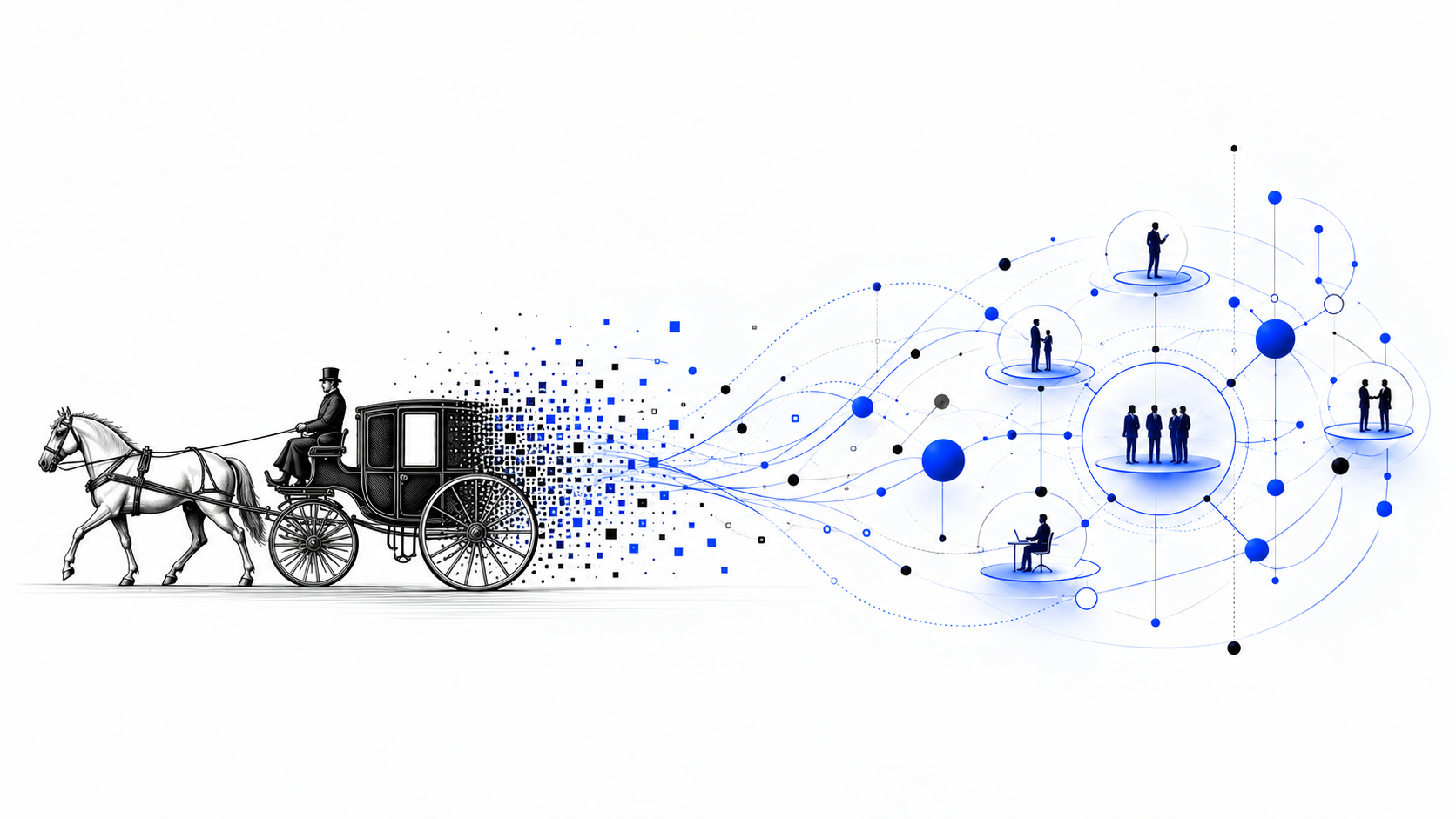
AI transformation is not about adding more copilots, agents, or automation to the organization you already have. It is about redesigning the system itself.
We believe AI-native means system-first: combining human judgment, machine intelligence, software, knowledge, and governance in the right architecture. The goal is not maximum automation, but stronger organizational capability.
AI transformation is also recursive. You build, use, observe, learn, redesign, and build again. That is why we dogfood these systems ourselves before advising others.
Don’t automate the old organization. Build the next one.
We are asking the wrong question about AI.
Most organizations are still asking where they can add a copilot, automate a task, or deploy an agent. Those are useful questions, but they are not the deepest ones. The more important question is this:
What should an organization become when intelligence itself becomes programmable?
AI is not just another software feature. It changes how work can be designed, how knowledge can flow, and how decisions can be made.
AI-native does not mean AI-first
AI-native does not mean using AI everywhere. Not every workflow needs an agent. Not every decision should be automated. Sometimes the best solution is software. Sometimes it is a rule, a better process, or a human conversation.
The right starting point is the system itself. Understand the work, the people, the constraints, and the context. Then decide where human and machine intelligence create the most value together.
The system is the unit of transformation
A task never exists on its own. It sits inside a workflow. That workflow sits inside a team. The team sits inside an organization, and the organization sits inside a broader ecosystem.
Change one part and the others react. Automate one step and the bottleneck may move elsewhere. Give an agent more autonomy and governance becomes more important. Make one team faster and another team may suddenly become the constraint.
This is why our thinking is influenced by Edgar Morin and the tradition of complex thought. The parts shape the whole, and the whole reshapes the parts.
The task is not the unit of transformation. The system is.
We need complex intelligence
The future is not human or AI. It is human and AI, working with software, knowledge, data, collective intelligence, and governance.
The real question is not who is smarter. It is how different forms of intelligence should work together.
We call this Complex Intelligence.
Complex Intelligence is not about building the smartest model. It is about orchestrating different forms of intelligence around a shared purpose.
Human versus AI is the wrong frame
Humans bring judgment, meaning, relationships, creativity, and accountability. Machines bring speed, scale, synthesis, reasoning, and execution. Software brings reliability. Knowledge brings context. Governance brings boundaries.
The goal is not maximum automation. The goal is the right architecture.
That architecture will often require holding tensions rather than resolving them too quickly:
autonomy and control;
experimentation and reliability;
speed and deliberation;
standardization and context;
human judgment and machine execution.
Complex systems are not designed by choosing one side. They are designed by making both sides work together.
AI transformation is recursive
Traditional transformation often assumes a linear sequence: strategy, design, implementation, deployment, done. AI transformation does not work that way.
The organization changes the AI system, and the AI system changes the organization. People adapt their work. That creates new information. New information changes the workflow. New capabilities create new possibilities.
The real loop is:
Build → Use → Observe → Learn → Redesign → Build again
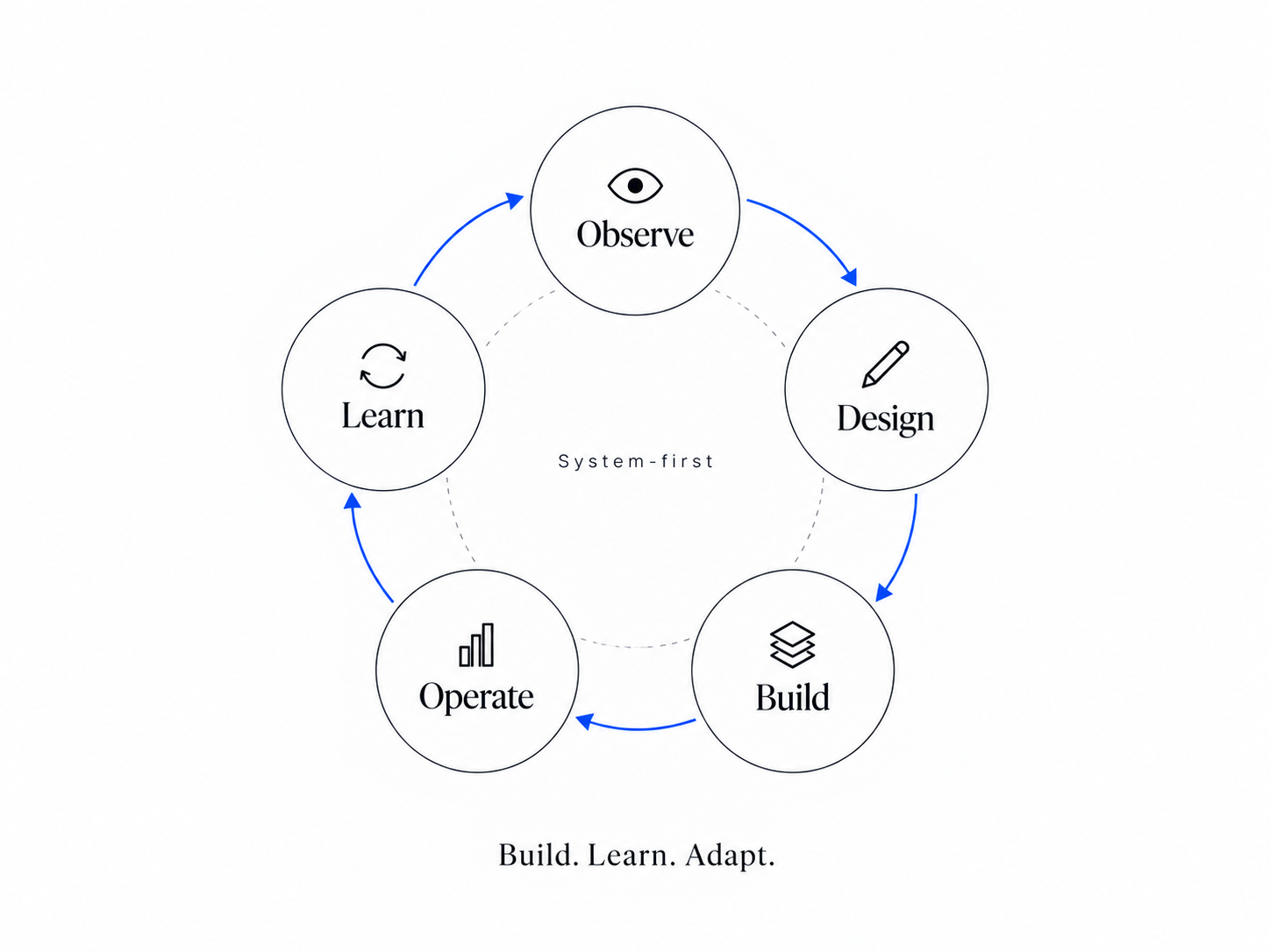
System-first
There is no final architecture. Only an evolving one.
Building is research
We do not yet know exactly what the AI-native organization will become. Nobody does.
That is why building matters. Every workflow is an experiment. Every failure reveals a boundary. Every human override teaches us where judgment still matters. Every useful system becomes a pattern we can reuse.
Building is research.
The future of work will not be discovered only in reports and strategy decks. It will be discovered in practice.
Dogfood before you advise
We do not want to tell organizations how to become AI-native while operating StudioGenAI like a traditional consultancy.
So we build these systems for ourselves first. Account Intelligence, Content systems, AI Builder OS, knowledge systems, agent workflows, evaluation, and governance are not side projects. They are part of how we learn.
We build. We use. We observe. We improve.
Then we bring those lessons into client environments.
Dogfood before you advise.
Transformation should increase agency
There is a version of AI transformation that creates dependency: dependence on consultants, opaque platforms, vendors, or a small group of specialists.
We believe good transformation should do the opposite. It should leave the organization more capable, more autonomous, and more confident.
The outcome should be greater:
understanding;
internal capability;
reusable infrastructure;
operational knowledge;
autonomy.
The goal is capability, not dependency.
The real product is not the agent
The real product of AI transformation is not the model, the chatbot, or even the application.
The real product is organizational capability.
Can the organization identify opportunities? Redesign work? Build safely? Operate systems? Learn from them? Improve continuously?
That is what matters.
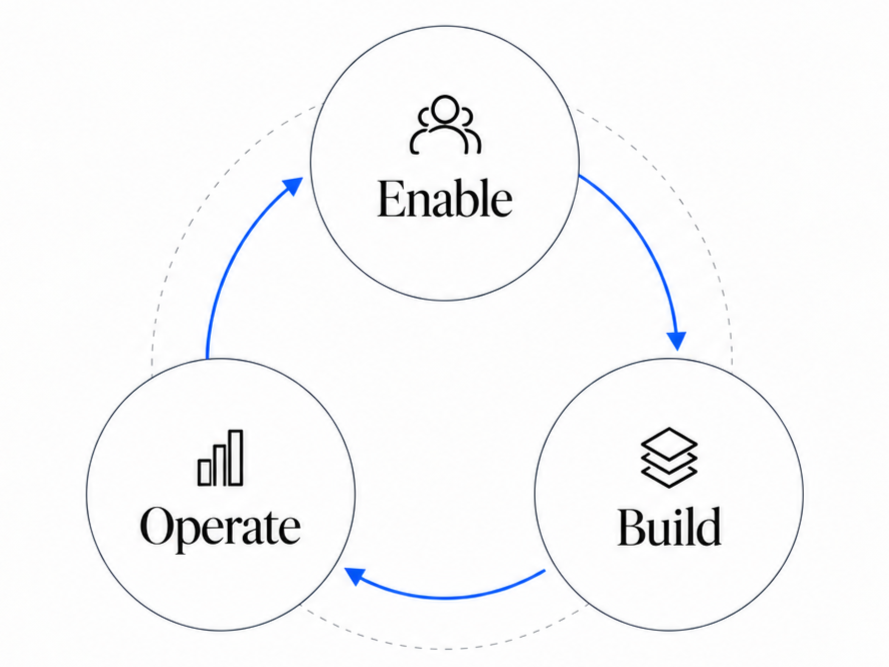
Enable. Build. Operate.
We think about transformation through three verbs.
Enable means building the organization’s ability to understand AI and redesign its own work.
Build means turning real problems into working systems, using agents where they make sense, software where software is better, and humans where judgment matters.
Operate means observing those systems in the real world, evaluating them, governing them, and learning from them.
Make it stand out
These are not three separate phases. They form a loop.
The real advantage
Access to powerful models will become widespread. Models will improve, costs will fall, and many capabilities will become commodities.
The deeper advantage will come from how quickly an organization learns to reorganize around new forms of intelligence.
What should stay human? What should be automated? Where should agents act autonomously? Where should software remain deterministic? Which knowledge should become explicit? Which workflows should disappear entirely?
Organizations that learn to answer these questions faster will build something much more defensible than access to a model.
They will build organizational learning velocity.
We are still early
We do not know the final form of the AI-native organization. That is the point.
What we do know is enough to act: AI is not just another software layer. Human versus AI is the wrong question. The system matters more than the task. Not everything should become an agent. Capability matters more than dependency. And the future will be discovered by building.
AI-native does not mean AI-first. It means system-first.
Don’t automate the old organization. Build the next one.